

Trauma Surgery
Surgical procedures designed to treat serious injuries from accidents or falls. This includes repairing bones, soft tissue, and nerves for full recovery and functionality.
Trauma Surgery Management
Case 1
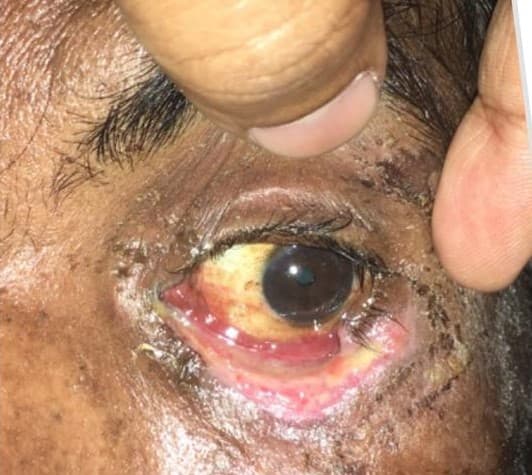
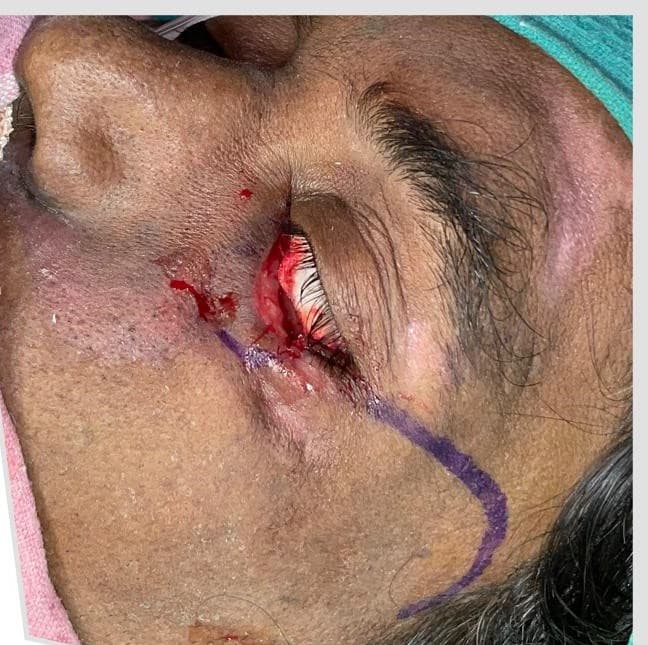
A visual comparison showing the healing journey from start to recovery.
Our Approach
Clinical Excellence & Patient Care
Our approach to Eyelid Trauma Reconstruction emphasizes restoring protective eyelid function and natural appearance. Before treatment, patients often suffer from incomplete eyelid closure, eye exposure, and corneal risk. After reconstruction, we achieve secure eyelid closure, restored blink reflex, and improved facial symmetry.
Case 2
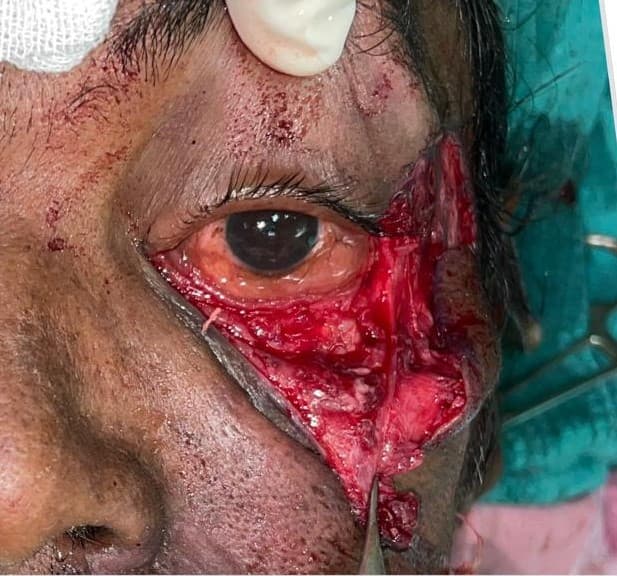
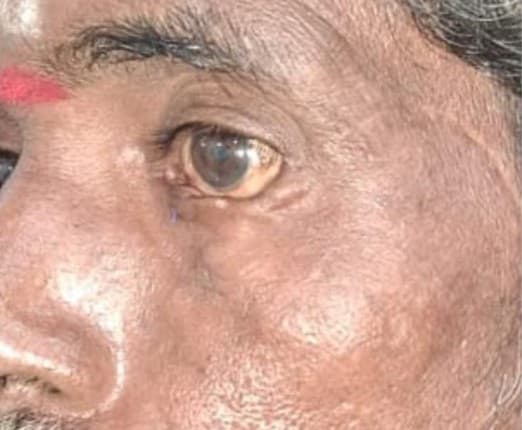
A visual comparison showing the healing journey from start to recovery.
Our Approach
Clinical Excellence & Patient Care
Our approach to Orbital Trauma Reconstruction focuses on rebuilding the bone structure around the eye to restore eye position and movement. Before surgery, patients may experience double vision, sunken eyes, or facial asymmetry. Post-reconstruction, we aim to restore normal eye alignment, binocular vision, and facial contour.
Case 3
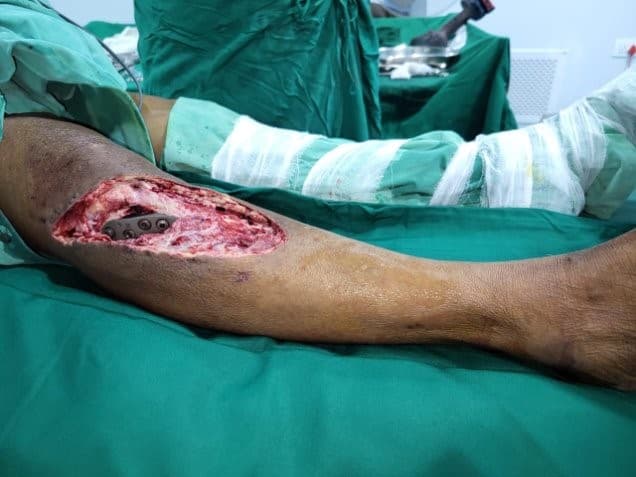
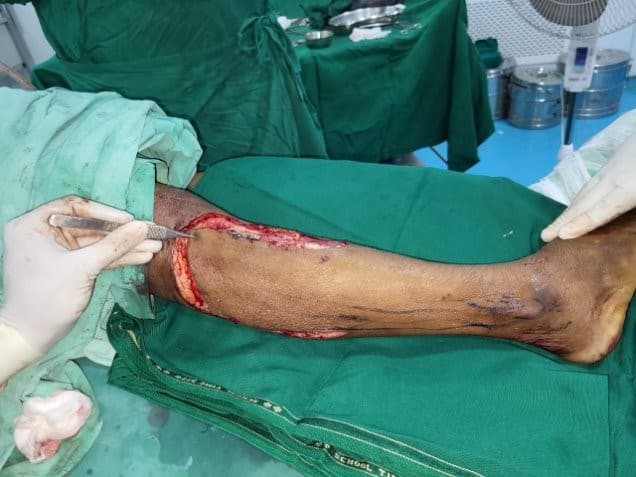
A visual comparison showing the healing journey from start to recovery.
Our Approach
Clinical Excellence & Patient Care
Soft Tissue Reconstruction for Exposed Hardware focuses on transferring vascularized tissue to cover and protect vital bone and fixation implants. Before treatment, patients face high risks of chronic infection, hardware failure. After surgery, patients benefit from stable, durable wound closure and successful preservation of limb.
Case 4
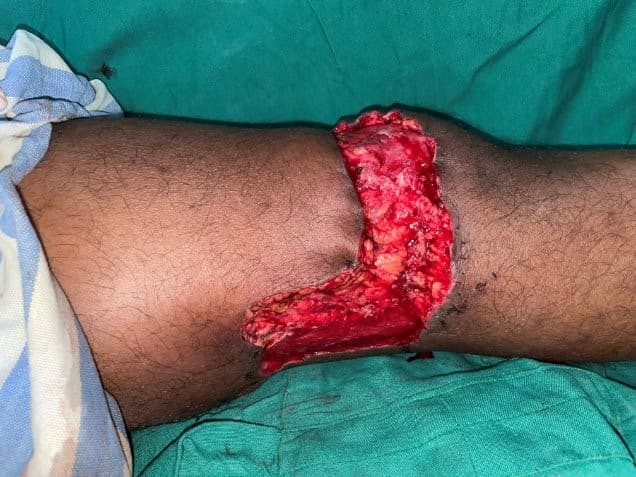
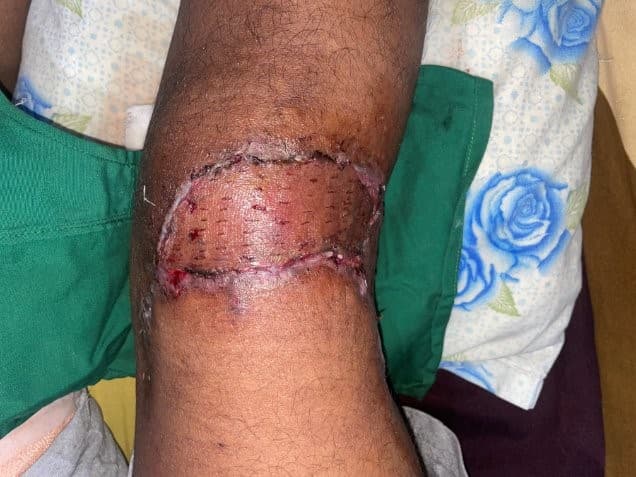
A visual comparison showing the healing journey from start to recovery.
Our Approach
Clinical Excellence & Patient Care
Knee Joint Trauma Reconstruction focuses on achieving stable soft tissue,high risk of joint infection, and potential loss of limb function Patient under dermal matrix,Thin split thickness graft by which patient benefited from successful wound closure, joint protection, and maximized functional return for walking and bending
Case 5
A visual comparison showing the healing journey from start to recovery.
Our Approach
Clinical Excellence & Patient Care
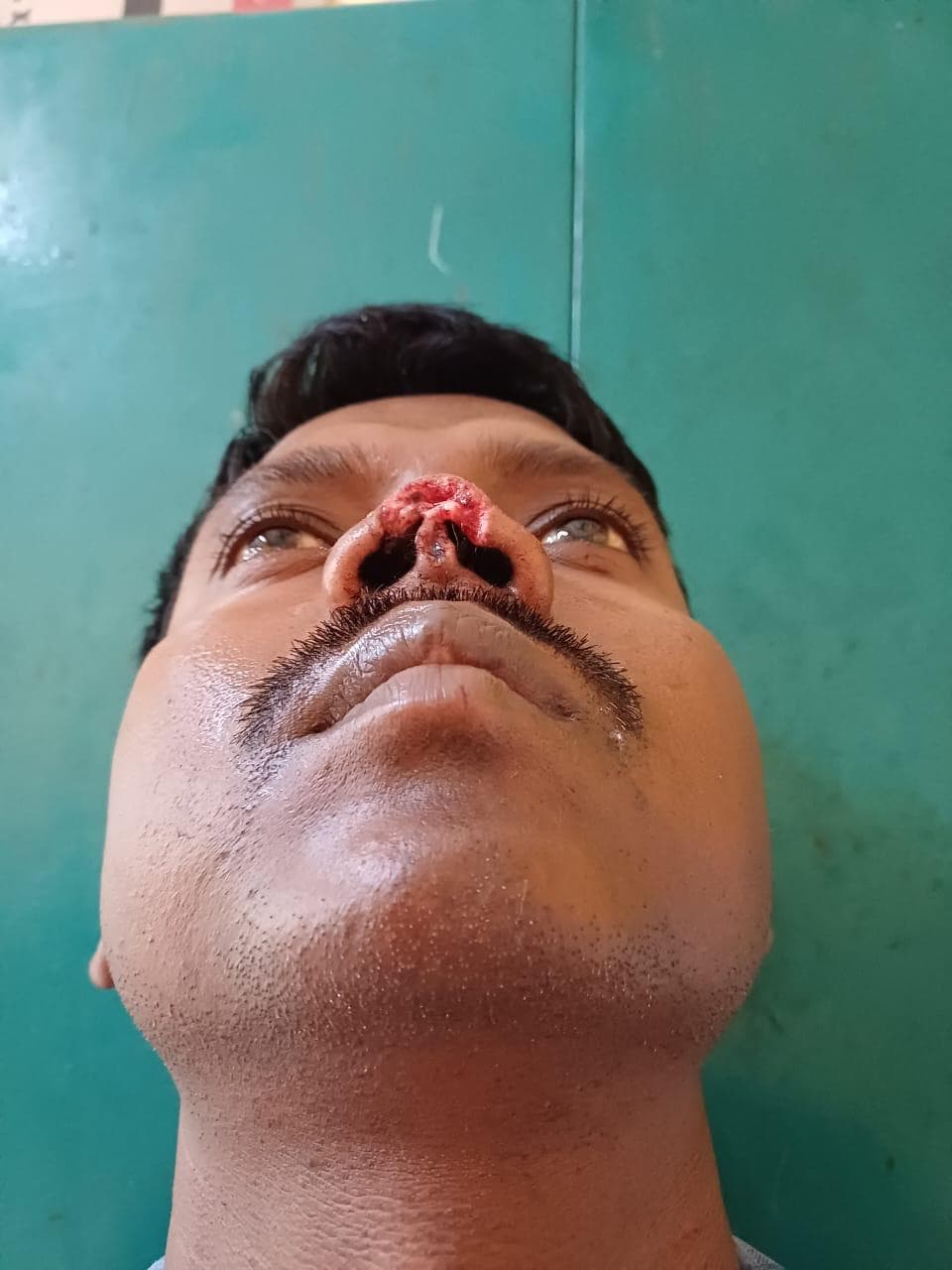
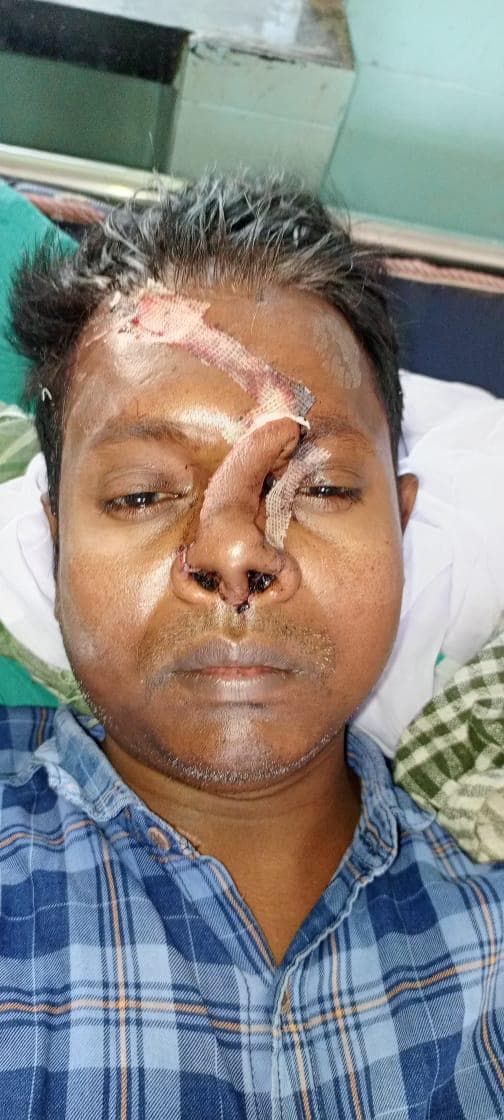
Acute traumatic defect of the lower central nose, involving significant tissue loss at the nasal tip and columella/alar margins. The wound exhibits exposed, hemorrhagic tissue that was meticulously reconstructed for function and aesthetic using a local regional forehead flap.
Case 6
A visual comparison showing the healing journey from start to recovery.
Our Approach
Clinical Excellence & Patient Care
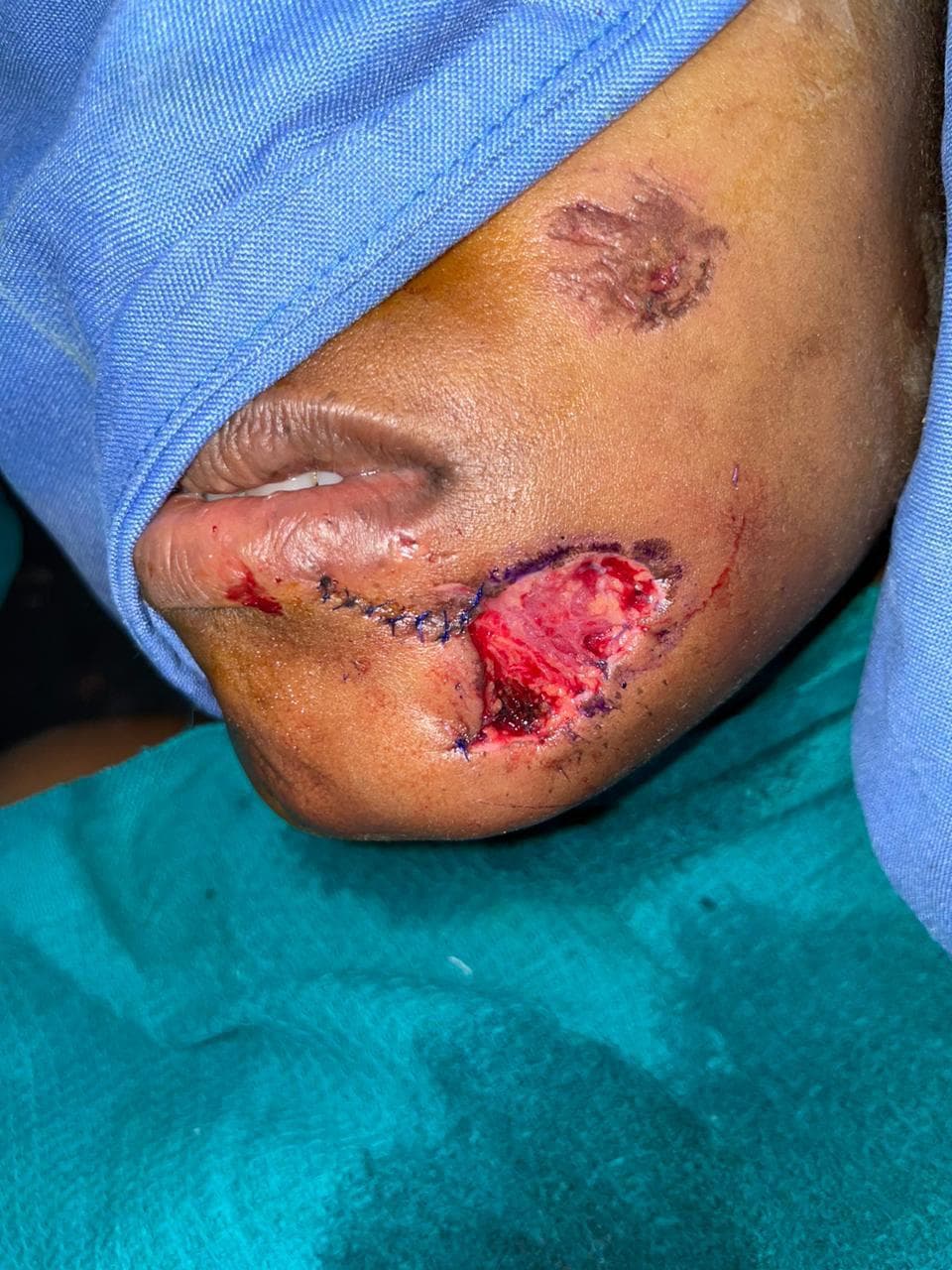
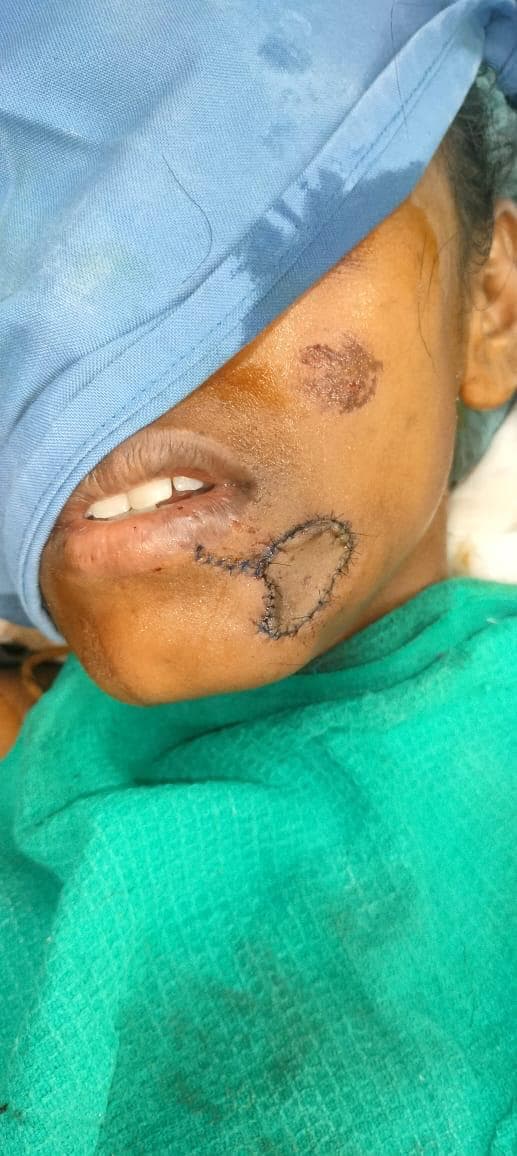
Post-traumatic facial wound over the chin and lower lip area. A portion of the lower lip laceration has been sutured, while an adjacent circular soft tissue defect is open and bleeding, prepared for definitive closure, likely with the mentioned Full Thickness Skin Graft.
Case 7
A visual comparison showing the healing journey from start to recovery.
Our Approach
Clinical Excellence & Patient Care
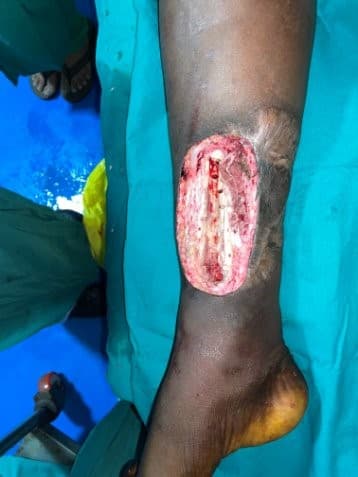
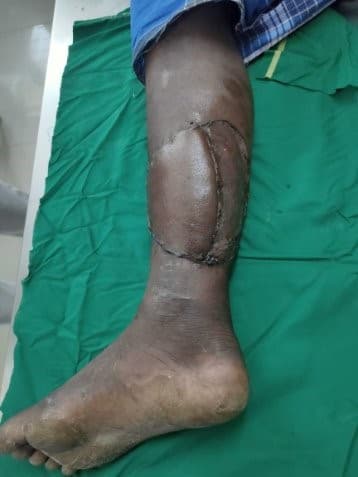
Free Flap Surgery focuses on transferring healthy tissue to complex wounds to preserve the limb. Before treatment, patients often face exposed bone, chronic infection, and the threat of amputation. After surgery, patients benefit from successful wound closure, structural integrity, and long-term limb salvage.threatening infection Patient was take up for through debridement and Loco-regional flap was given wot resurface the wound and cover vital structures
Case 8
A visual comparison showing the healing journey from start to recovery.



Our Approach
Clinical Excellence & Patient Care
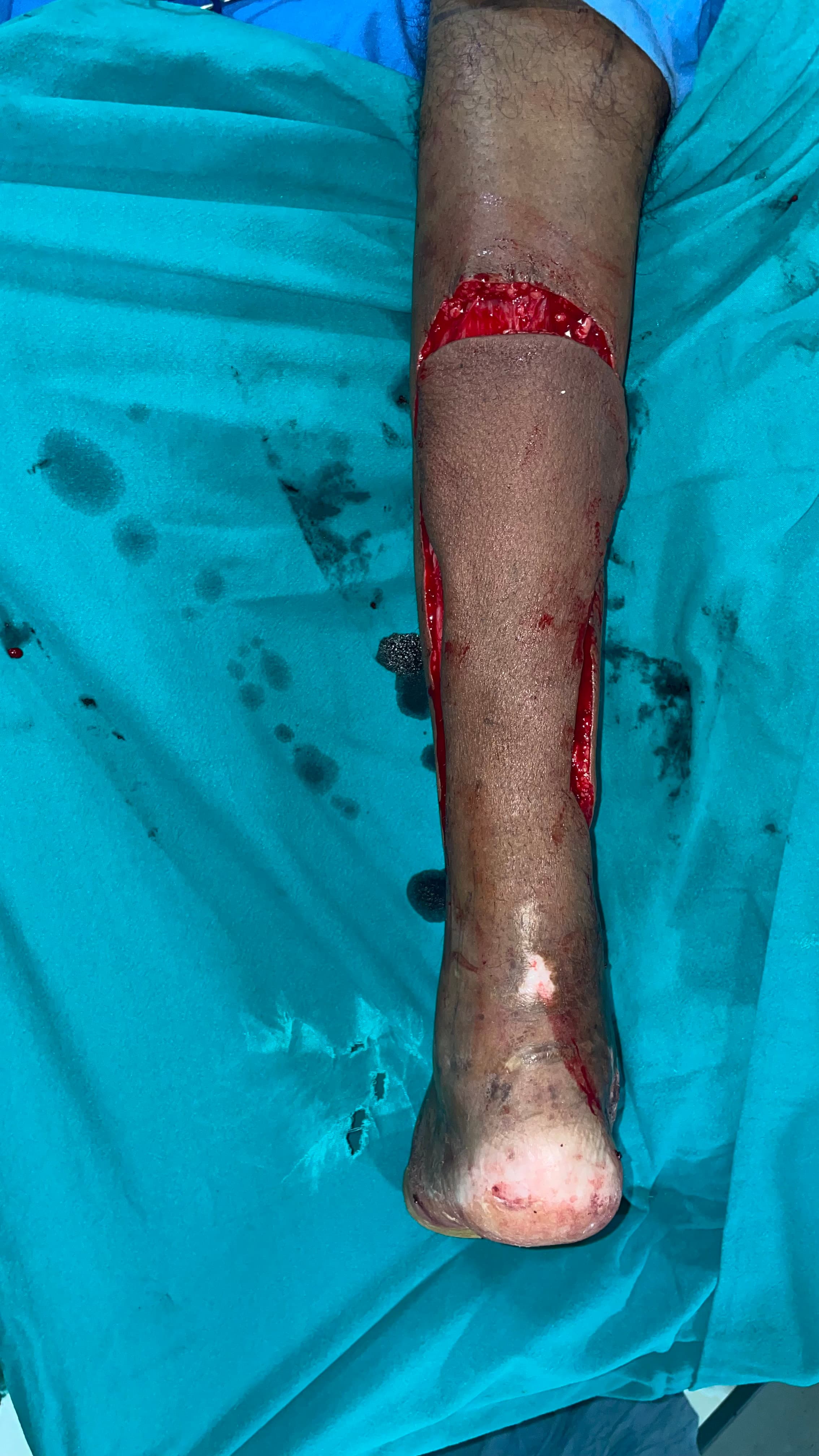
treatment involved a multi-step process, starting with thorough surgical debridement to remove all non-viable tissue, followed by advanced wound care techniques to promote a healthy bed of granulation tissue. The final stage involved surgical reconstruction to close the wound and restore the skin's protective barrier.
Case 9
A visual comparison showing the healing journey from start to recovery.


Our Approach
Clinical Excellence & Patient Care
Post-traumatic Limb Reconstruction utilizing a Free Gracilis flap focuses on providing high-quality vascularized soft tissue to cover extensive defects and protect underlying vital structures. Before treatment, patients face large-scale tissue loss, exposed bone or hardware, and a significant risk of chronic infection and limb loss. After surgery, patients benefit from a robust biological seal that facilitates bone healing, fills dead space, and provides a stable surface for future rehabilitation or skin grafting.
Case 10
A visual comparison showing the healing journey from start to recovery.

Our Approach
Clinical Excellence & Patient Care
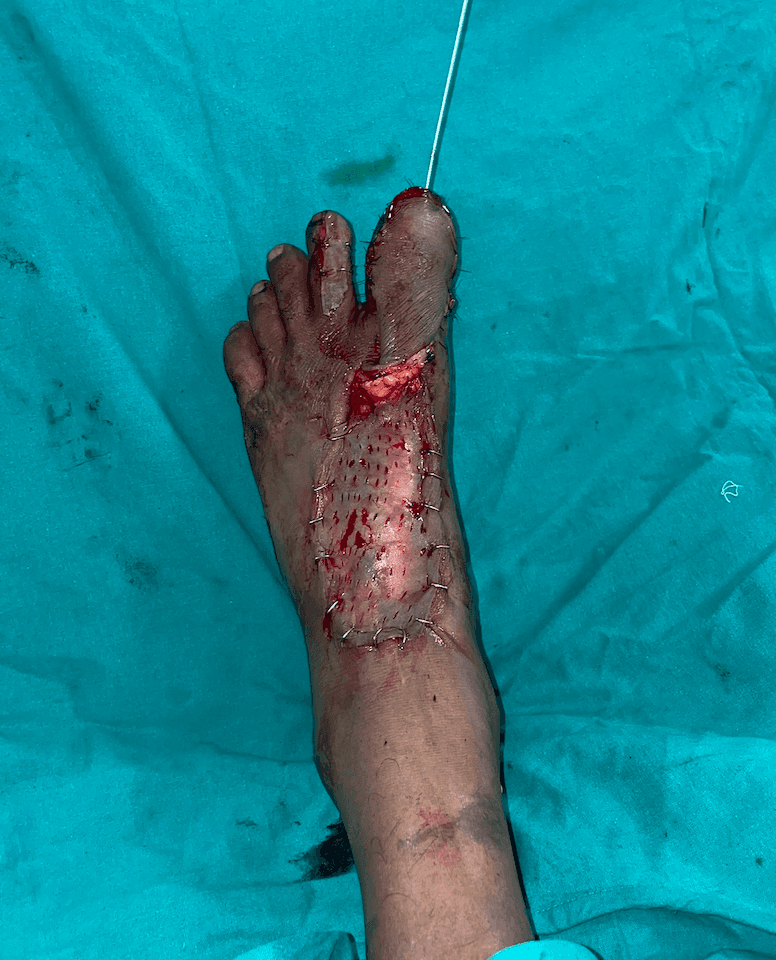
Great Toe Reconstruction utilizing a Quaba flap focuses on salvaging the primary weight-bearing pillar of the foot while maintaining hallux length. Before treatment, patients face distal phalanx bone exposure, loss of the nail bed complex, and the high risk of osteomyelitis or terminalization (amputation). After surgery, patients benefit from stable, sensate soft tissue coverage that preserves the lever-arm function of the foot, allowing for a normal gait cycle and the ability to wear standard footwear.
Case 11
A visual comparison showing the healing journey from start to recovery.


Our Approach
Clinical Excellence & Patient Care
Post-infective Raw Area Reconstruction focuses on stabilizing the wound bed and providing definitive skin closure to prevent further fluid loss and infection. Before treatment, patients face large, open granular surfaces, a high risk of systemic sepsis, and the potential for debilitating scar contractures. After surgery, patients benefit from a restored biological barrier, accelerated healing through skin grafting, and the preservation of underlying muscle and soft tissue integrity.
Case 12
A visual comparison showing the healing journey from start to recovery.

Our Approach
Clinical Excellence & Patient Care
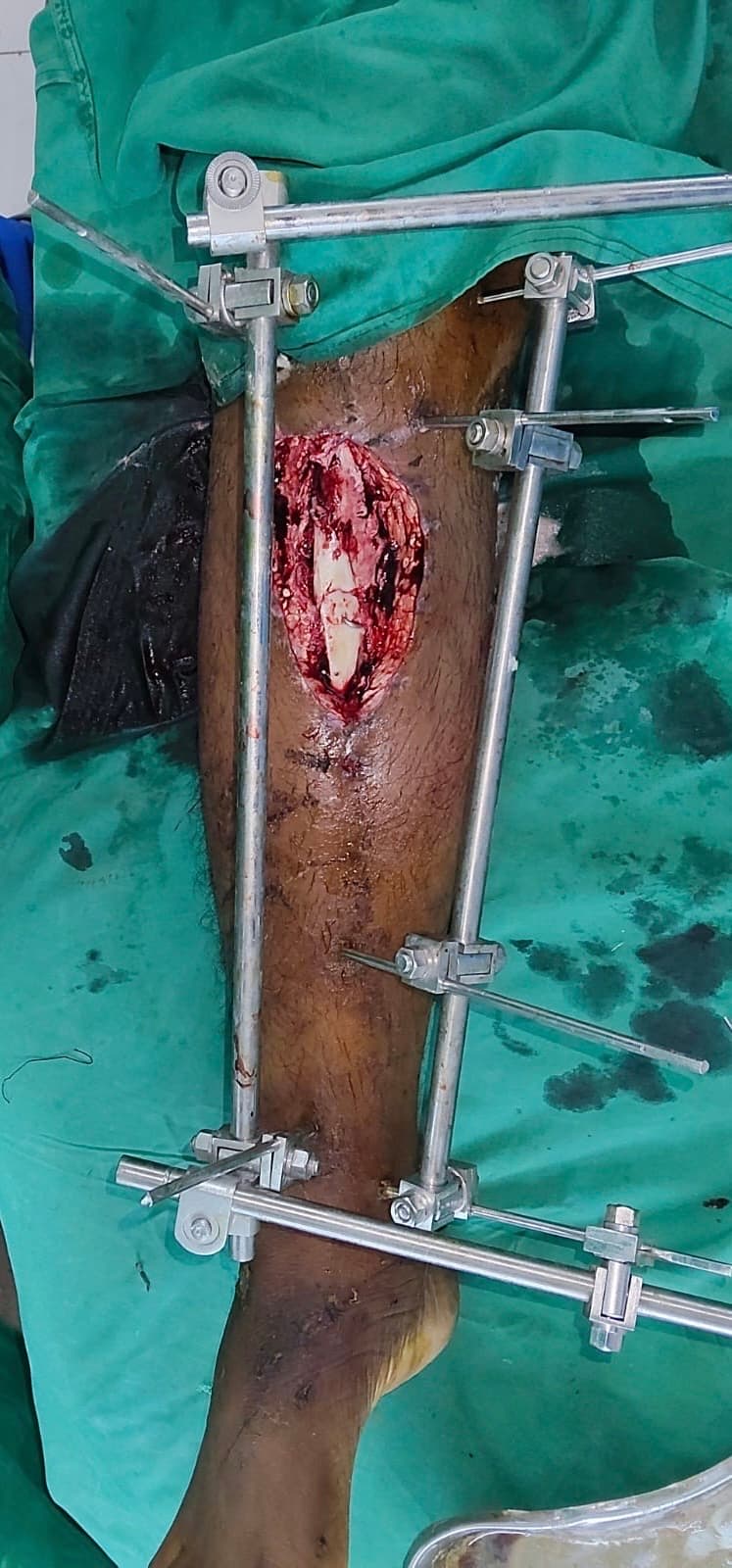
Post-traumatic Limb Reconstruction focuses on providing vascularized soft tissue coverage to exposed bone and stabilizing the skeletal framework. Before treatment, patients face large open fractures, a high risk of chronic bone infection (osteomyelitis), and potential limb loss. After surgery, patients benefit from a robust biological seal that promotes bone healing, prevents hardware contamination, and restores the structural integrity necessary for eventual weight-bearing and mobility.
Start Your Healing Journey Today
Schedule a consultation with our specialist team