

Diabetic Foot Ulcer
A sore or wound on your foot caused by diabetes. Poor blood flow and nerve damage make it slow to heal. Our treatment ensures recovery through precision wound management and infection control.
Diabetic Foot Ulcer Management
Case 1
A visual comparison showing the healing journey from start to recovery.


Our Approach
Clinical Excellence & Patient Care
Our approach to Diabetic Foot Ulcer treatment focuses on limb salvage, meticulous wound care, and offloading pressure. Before treatment, patients face the risk of severe infection and potential amputation. After comprehensive care, patients benefit from successful wound closure and restored mobility
Case 2
A visual comparison showing the healing journey from start to recovery.
Our Approach
Clinical Excellence & Patient Care
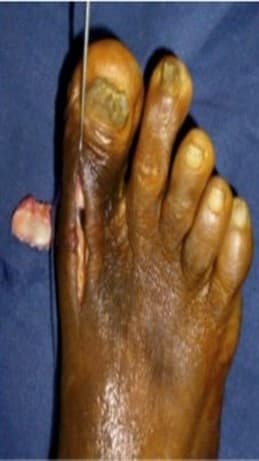
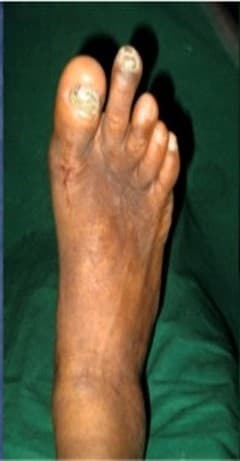
Our approach to Diabetic Foot Debridement and offloading focuses on infection control and preserving maximum limb function. Before treatment, patients often experience spreading infection and severe tissue loss. After surgery, patients benefit from elimination of infection and prevention of major amputation
Case 3
A visual comparison showing the healing journey from start to recovery.
Our Approach
Clinical Excellence & Patient Care
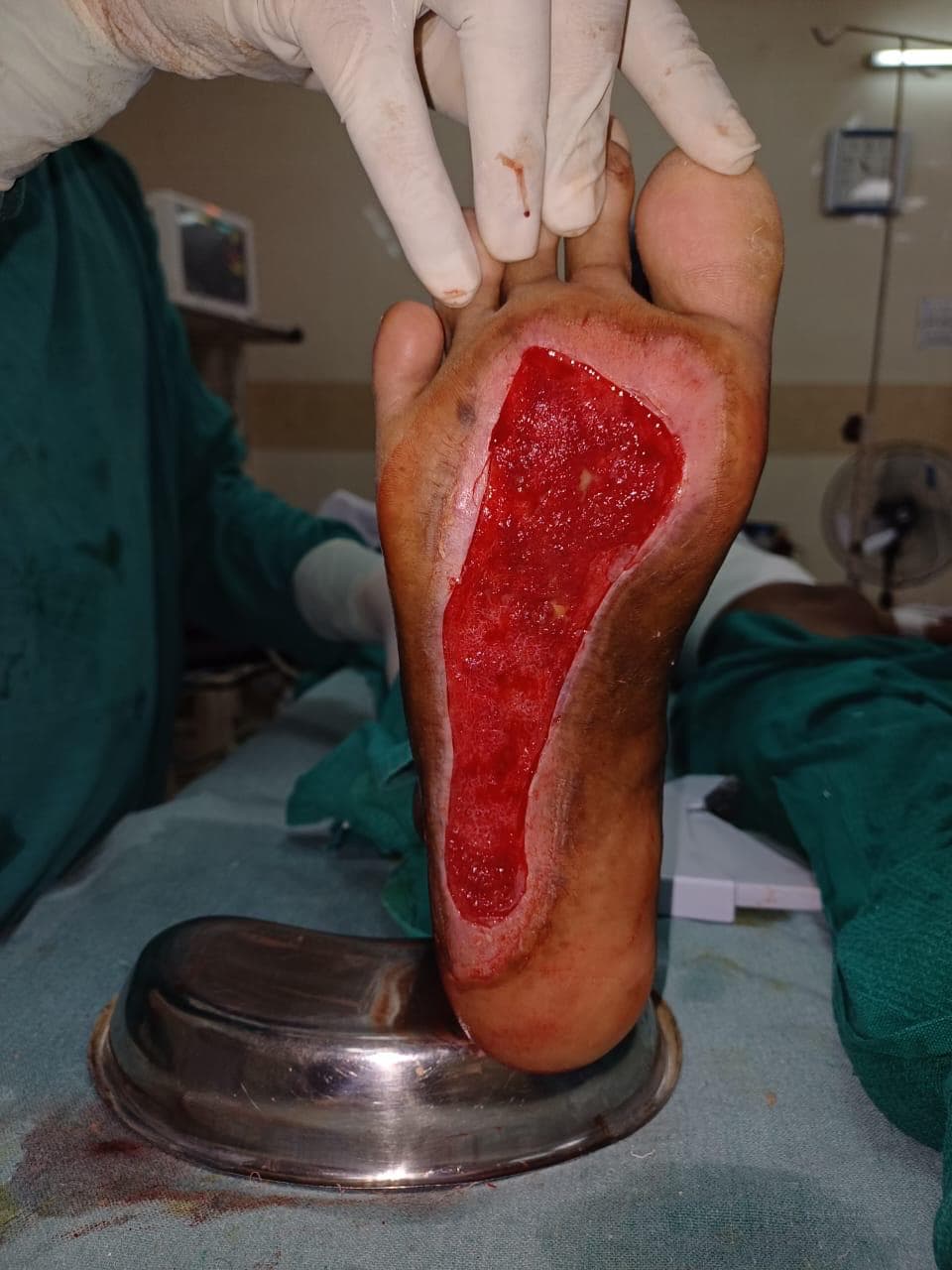
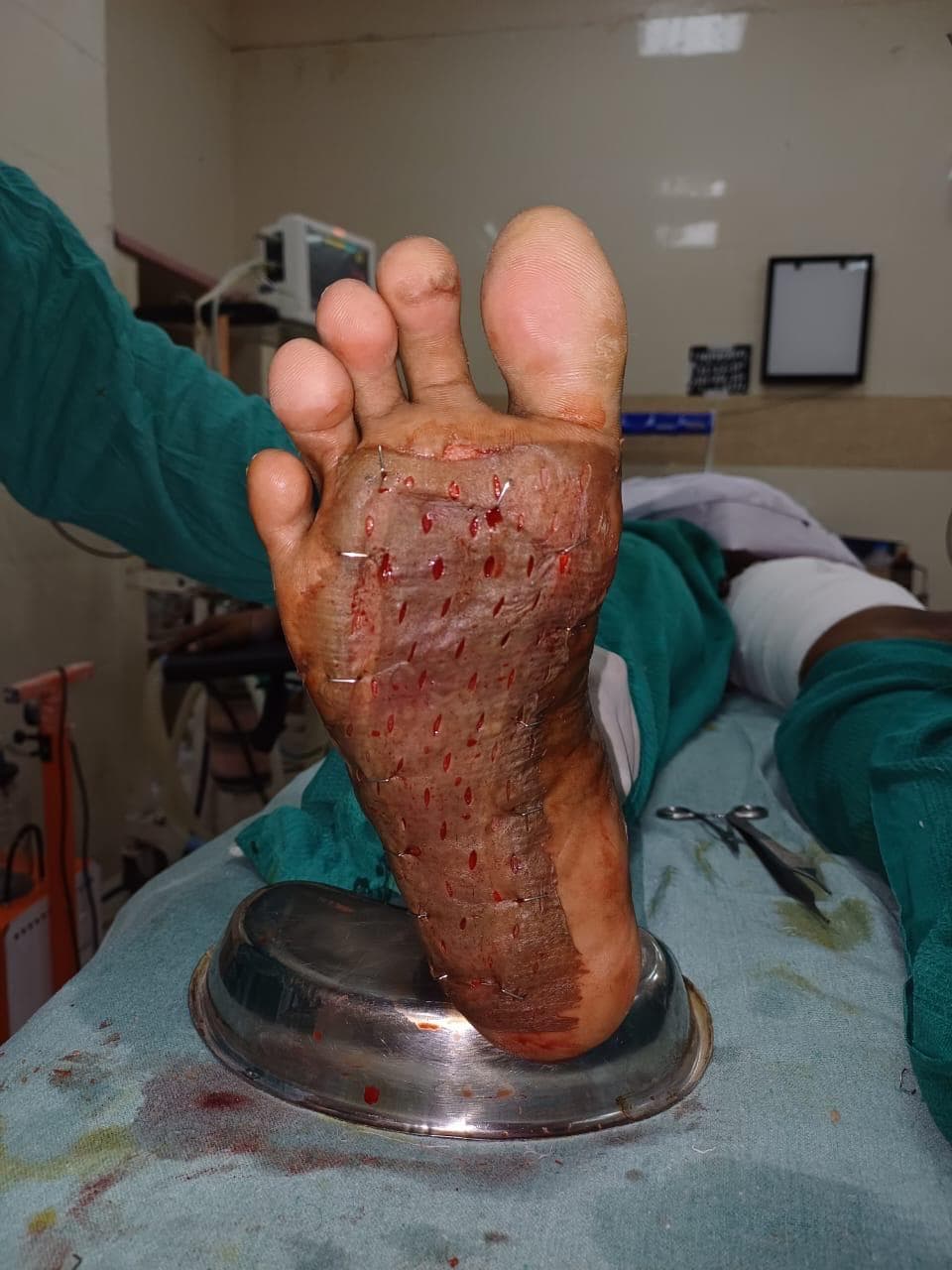
Severe diabetic foot ulcer on the plantar surface of a foot, after through debridement and negative pressure dressing the wound was prepared for split thickness graft as there was no major internal structures were exposed.
Case 4
A visual comparison showing the healing journey from start to recovery.
Our Approach
Clinical Excellence & Patient Care
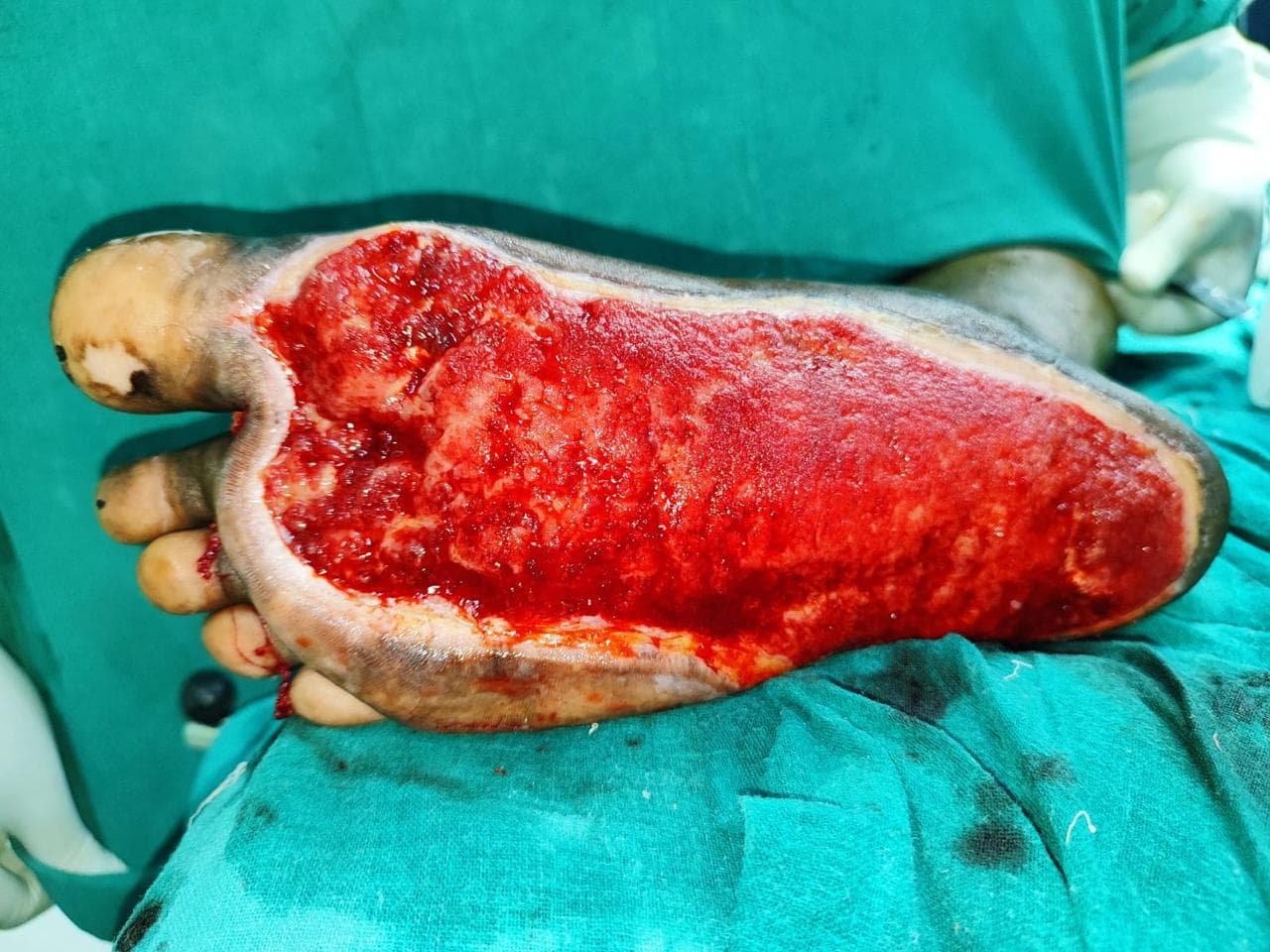
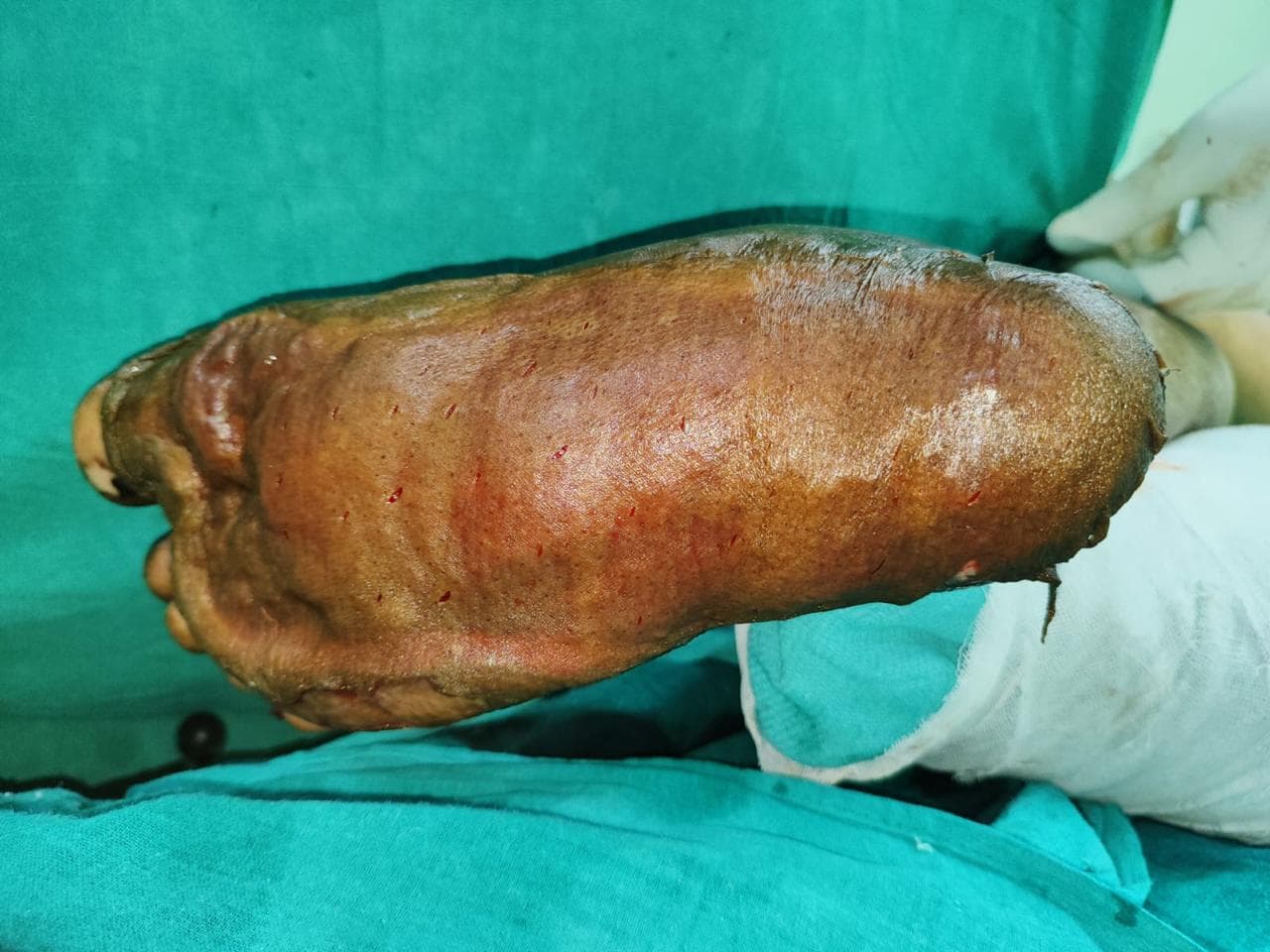
Extensive diabetic foot wound on the medial (inner) side and plantar (sole) surface of the foot, likely immediately after surgical debridement. The wound is characterized by a large surface area of bright red, viable-looking granulation tissue with a defined border against the surrounding skin, which appears thickened and hyperpigmented.
Case 5
A visual comparison showing the healing journey from start to recovery.
Our Approach
Clinical Excellence & Patient Care
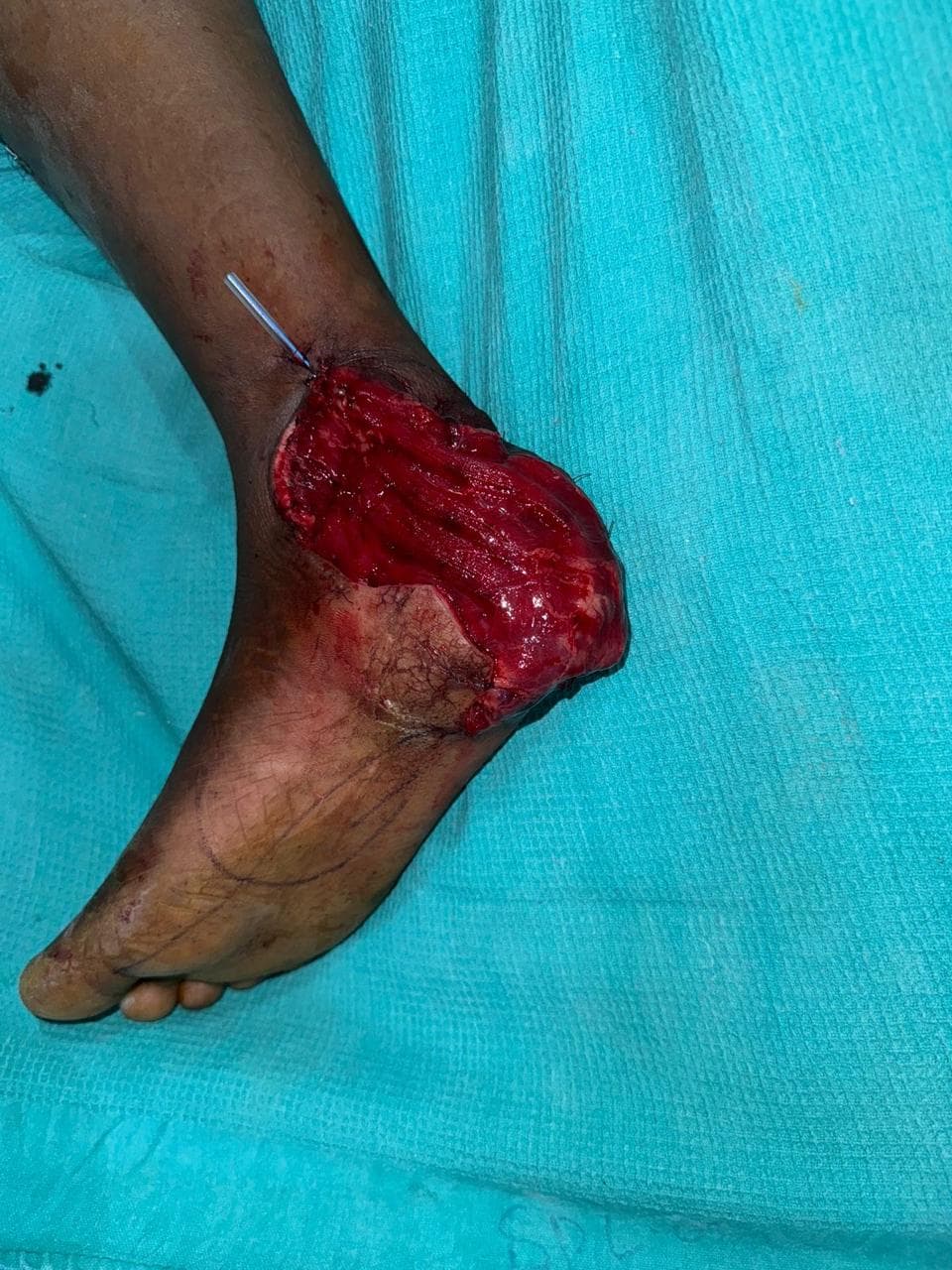
Severe diabetic foot wound on the posterior aspect and heel, likely post-amputation/extensive debridement. The wound shows a large defect with a mix of granulation tissue, slough (yellowish-white tissue), and exposed deep structures. The young man to have no repeated heel ulcers and improve pressure on the hind foot a free gracilis flap was give to improve the nature and consistency of the soft tissue and improve the pressure distribution on the posterior aspect of foot.
Case 6
A visual comparison showing the healing journey from start to recovery.
Our Approach
Clinical Excellence & Patient Care
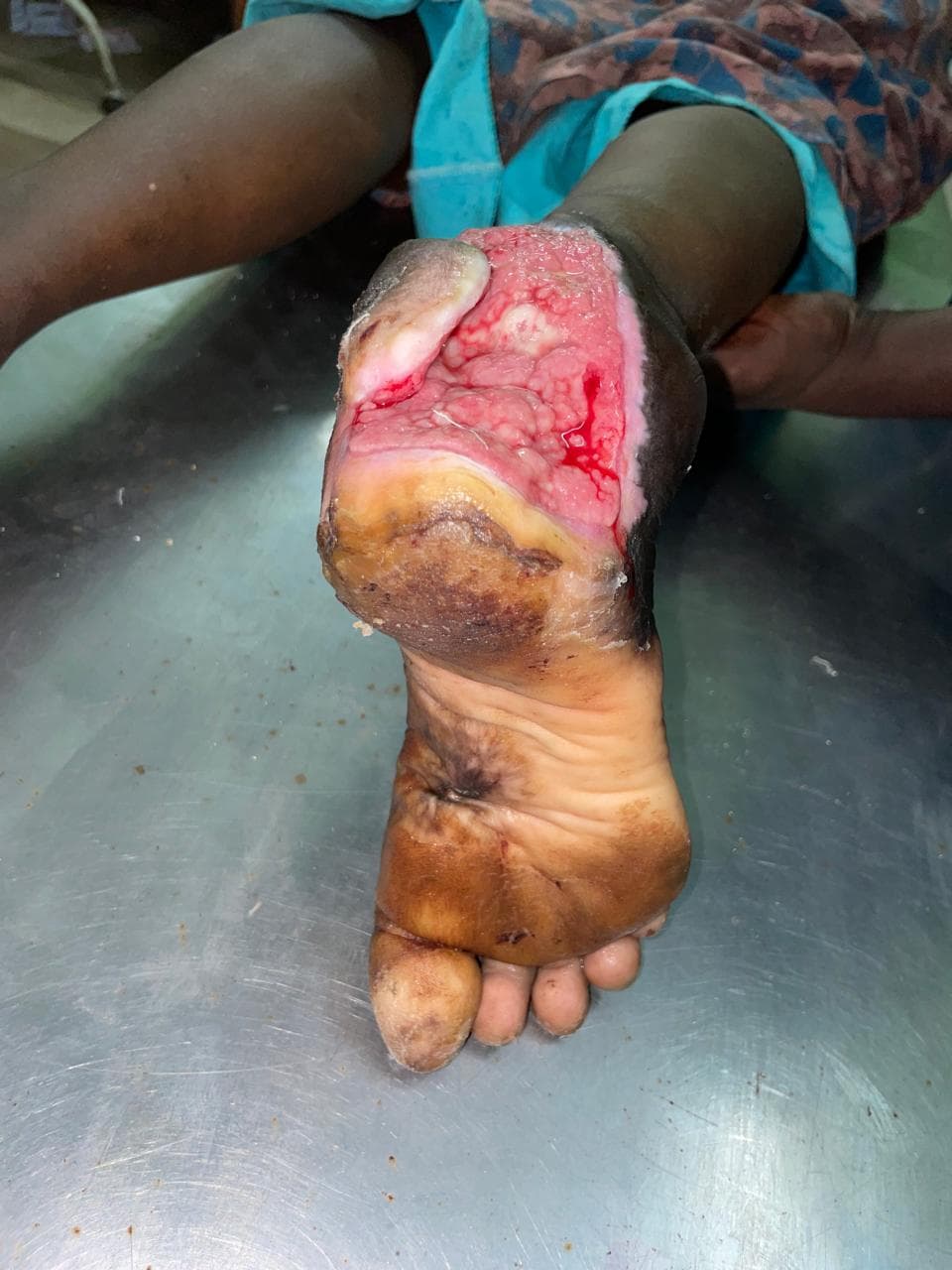
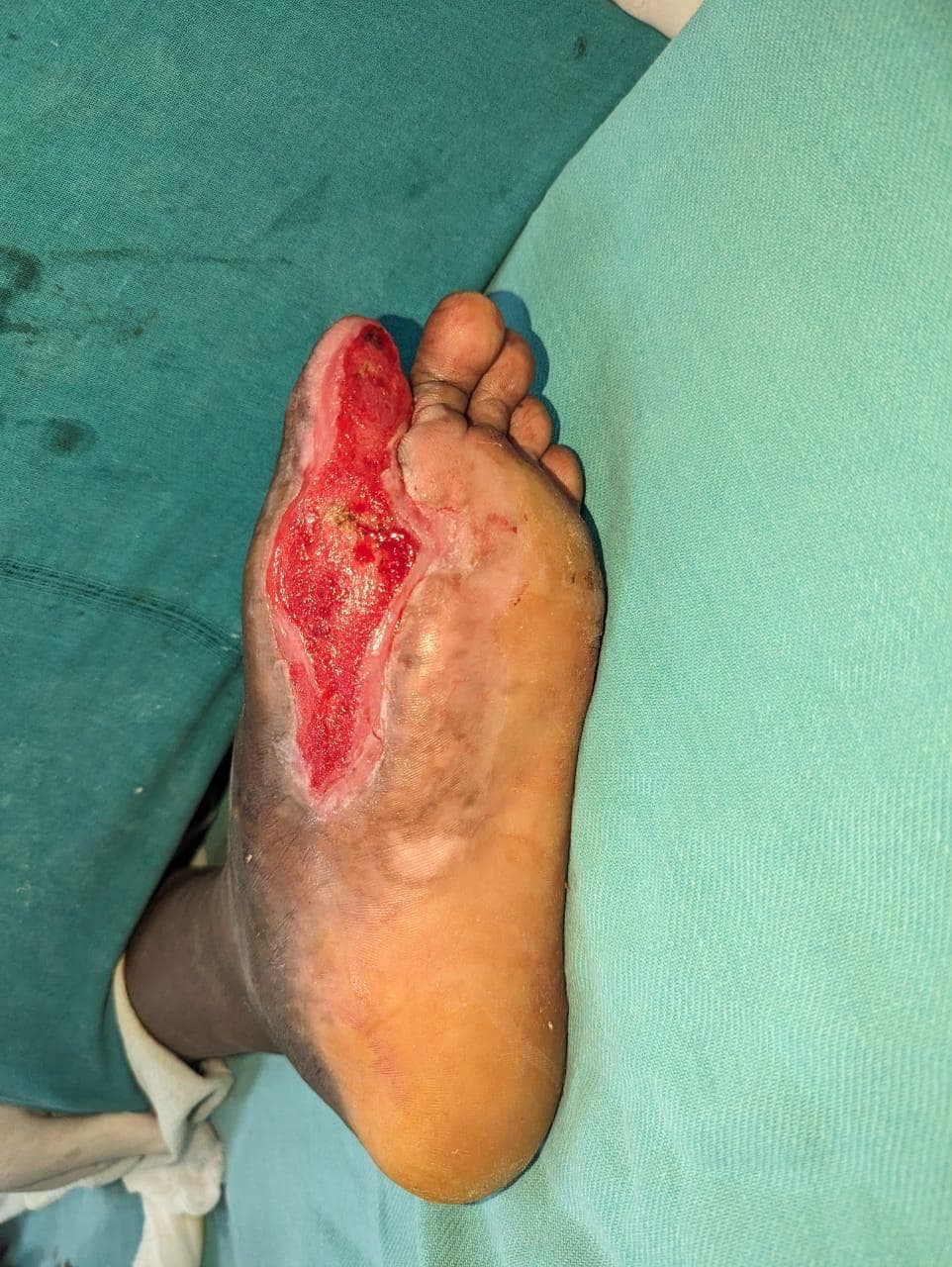
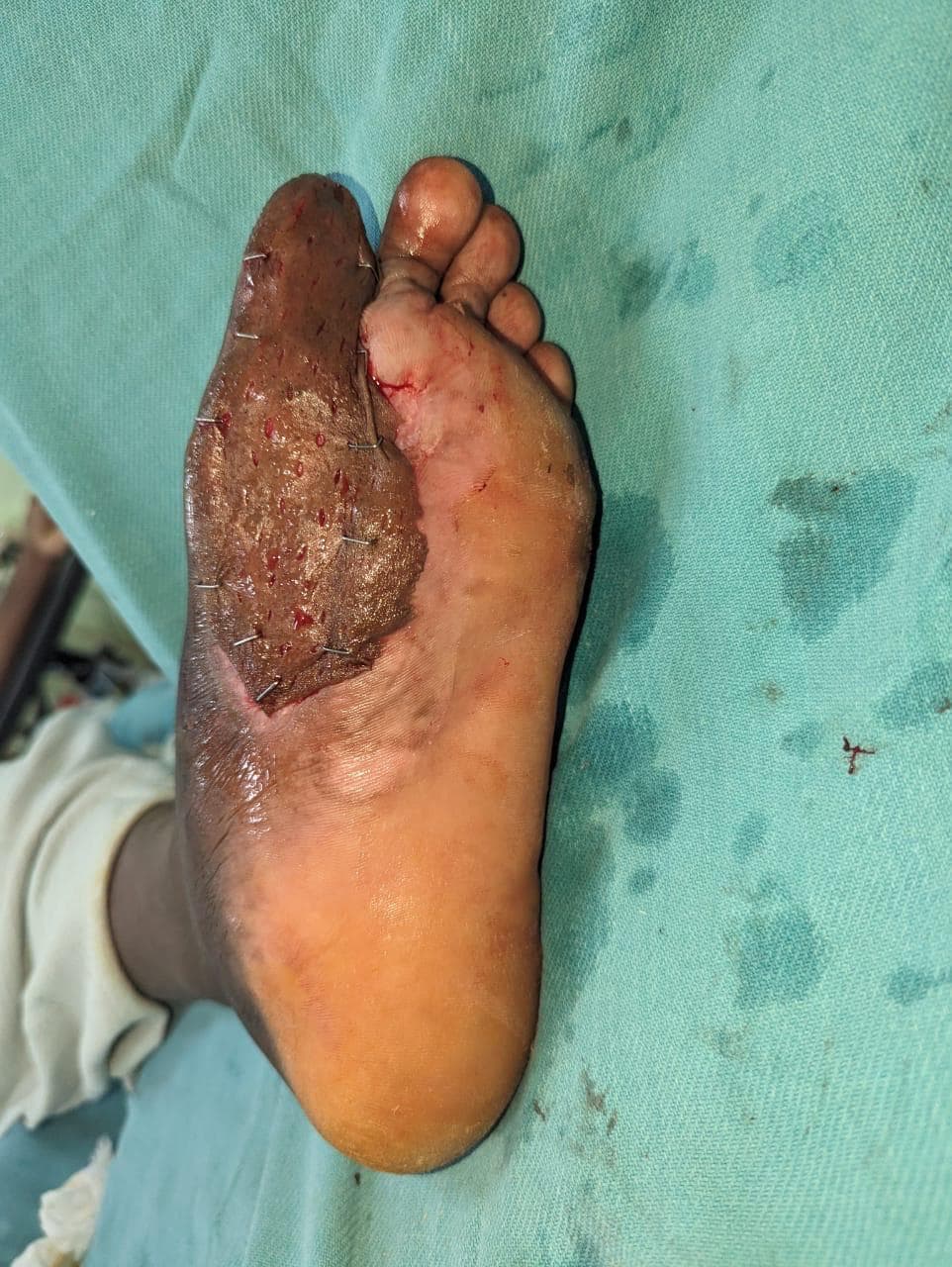
Diabetic foot ulcer located on the plantar and medial aspect of the forefoot, specifically near the great toe. The wound appears deep and non-healing, characterized by red granulation tissue was treated with split thickness skin graft and give a customized off loading foot wear in consultation with orthotics.
Case 7
A visual comparison showing the healing journey from start to recovery.
Our Approach
Clinical Excellence & Patient Care
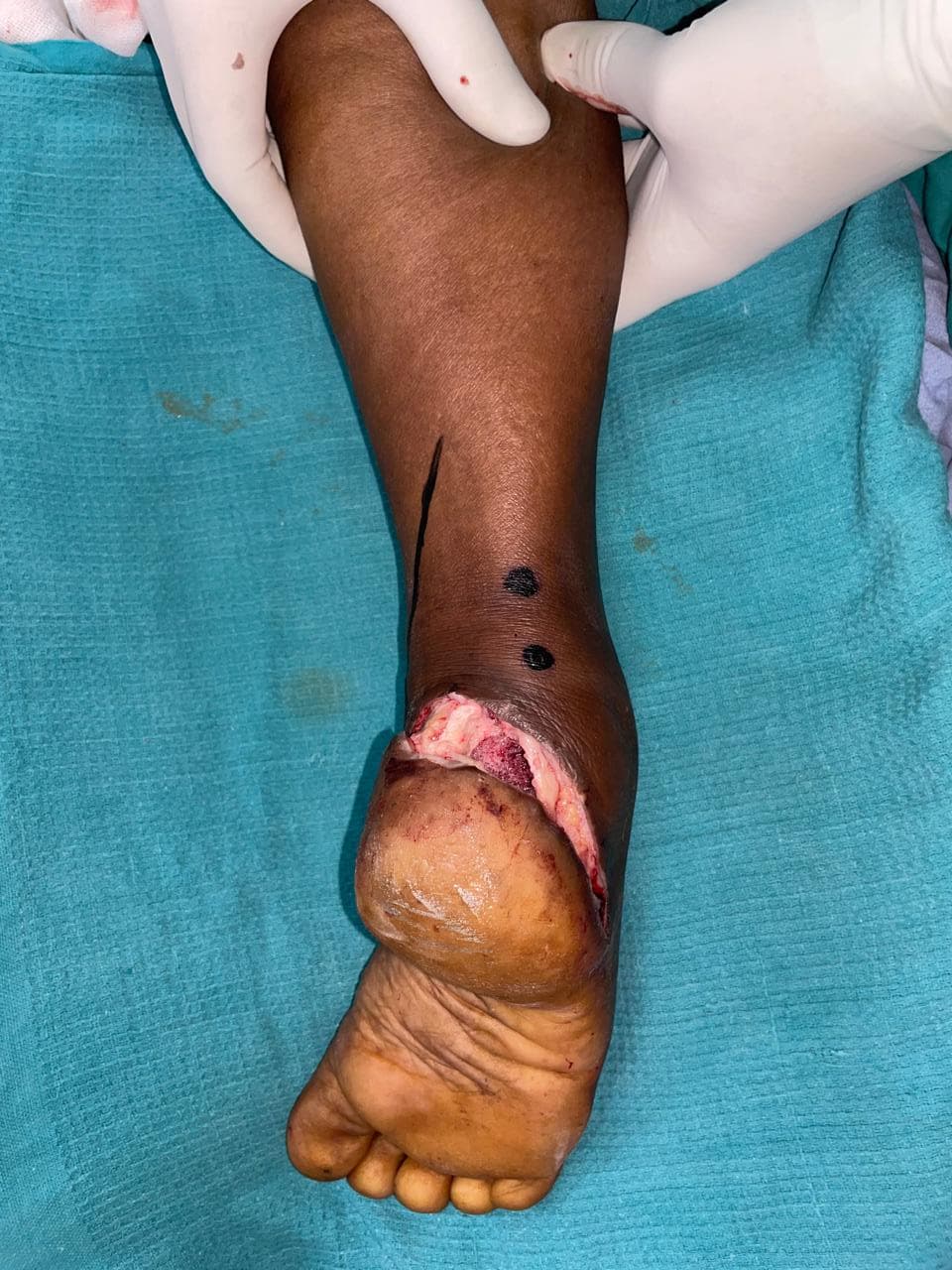
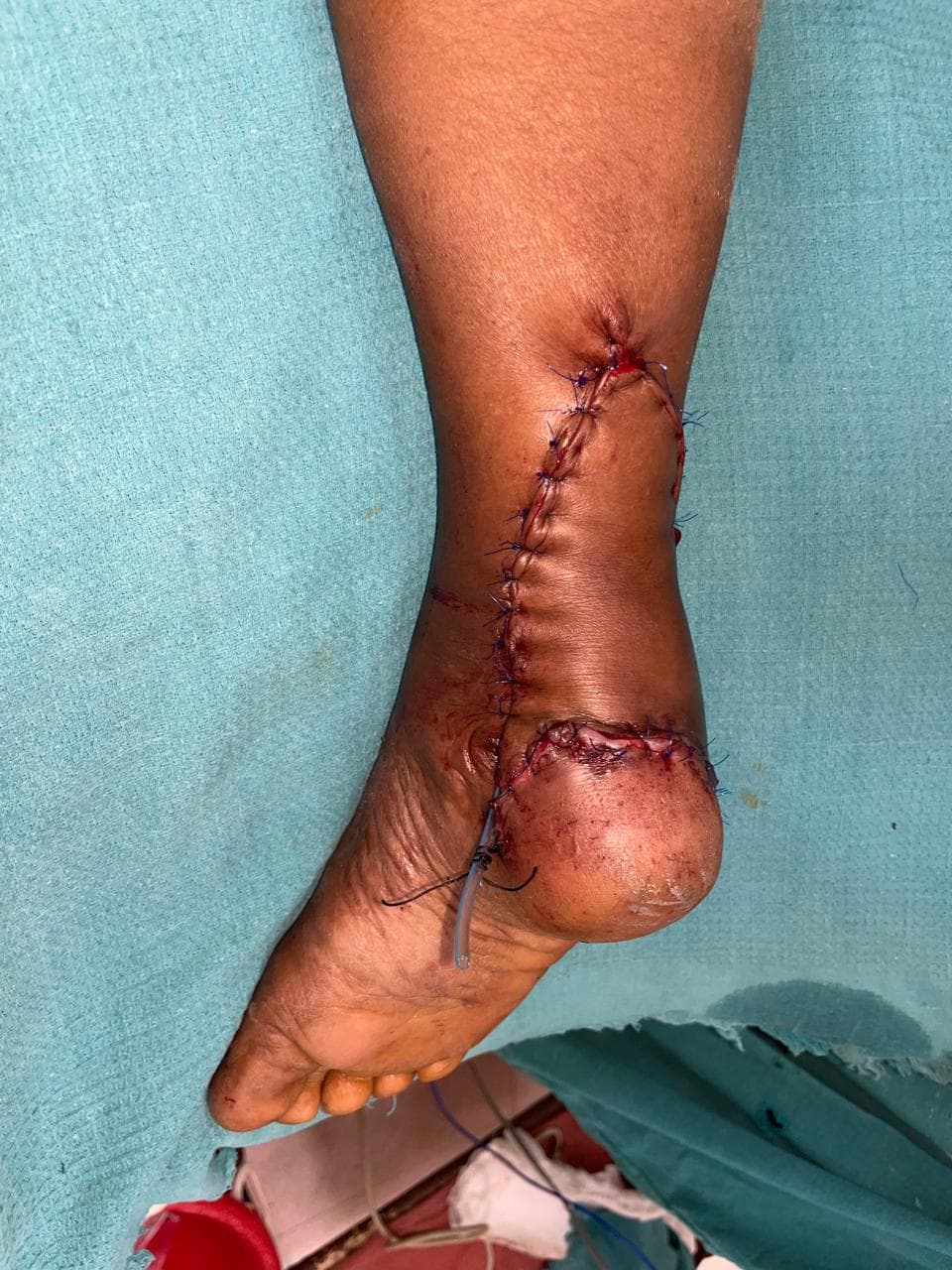
Severe soft tissue defect and open wound over the heel and Achilles tendon region of the ankle, typical of an infected diabetic wound requiring specialized surgical intervention. The wound shows exposed, partially debrided tissue and a large defect requiring flap coverage.
Case 8
A visual comparison showing the healing journey from start to recovery.
Our Approach
Clinical Excellence & Patient Care
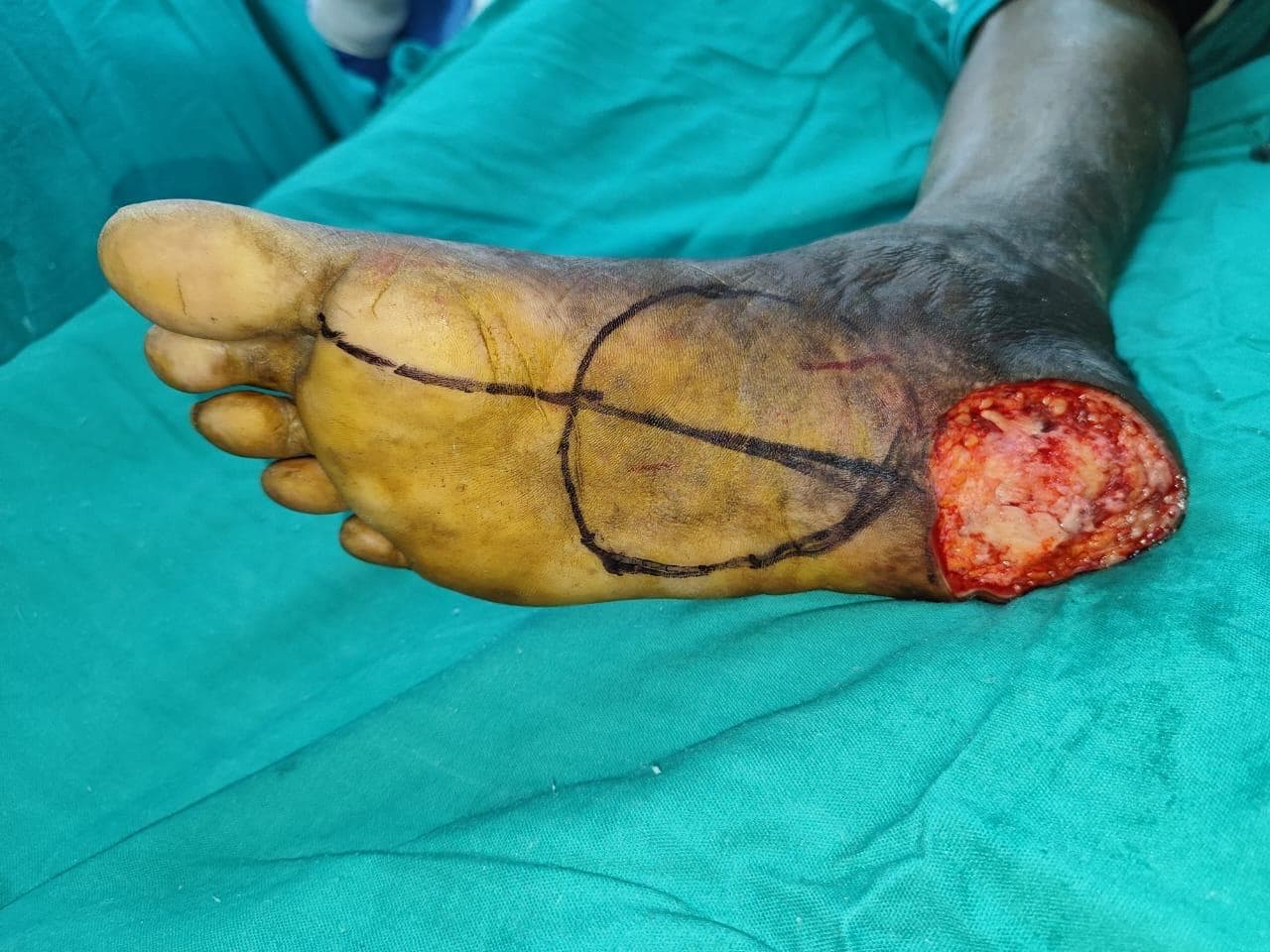
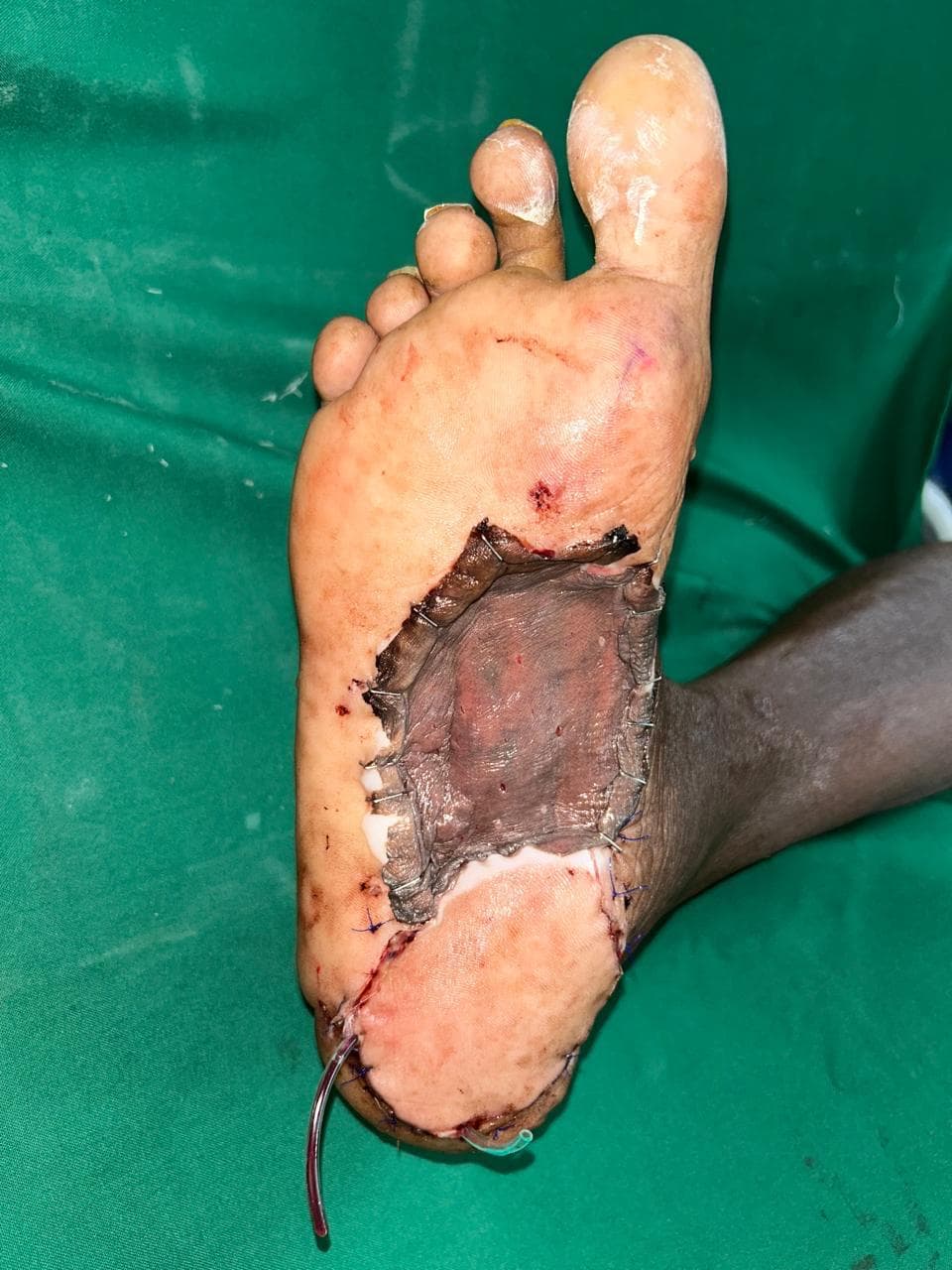
Diabetic foot with an open wound over the heel aspect following debridement. The image shows evidence of chronic diabetic changes, including skin hyperpigmentation and thickening. Pre-operative surgical markings are visible on the plantar surface, outlining a local or regional flap planned for coverage of the defect.
Case 9
A visual comparison showing the healing journey from start to recovery.


Our Approach
Clinical Excellence & Patient Care
Our multidisciplinary approach to the Diabetic Foot focuses on limb salvage, wound debridement, and promoting healing. Before treatment, patients often present with complex, non-healing ulcers and tissue necrosis. After specialized surgical and wound care, the goal is a fully healed, functional limb with restored skin integrity.
Case 10
A visual comparison showing the healing journey from start to recovery.


Our Approach
Clinical Excellence & Patient Care
Diabetic Foot Offloading focuses on redistributing mechanical pressure away from ulcerated areas to facilitate chronic wound healing and prevent deeper tissue necrosis. Before treatment, patients face non-healing neuropathic ulcers, a high risk of deep-seated infection (osteomyelitis), and the progressive destruction of the foot's structural integrity. After surgery, patients benefit from a reduced mechanical load on vulnerable tissues, accelerated ulcer closure, and a significantly lowered risk of major limb amputation.
Start Your Healing Journey Today
Schedule a consultation with our specialist team